
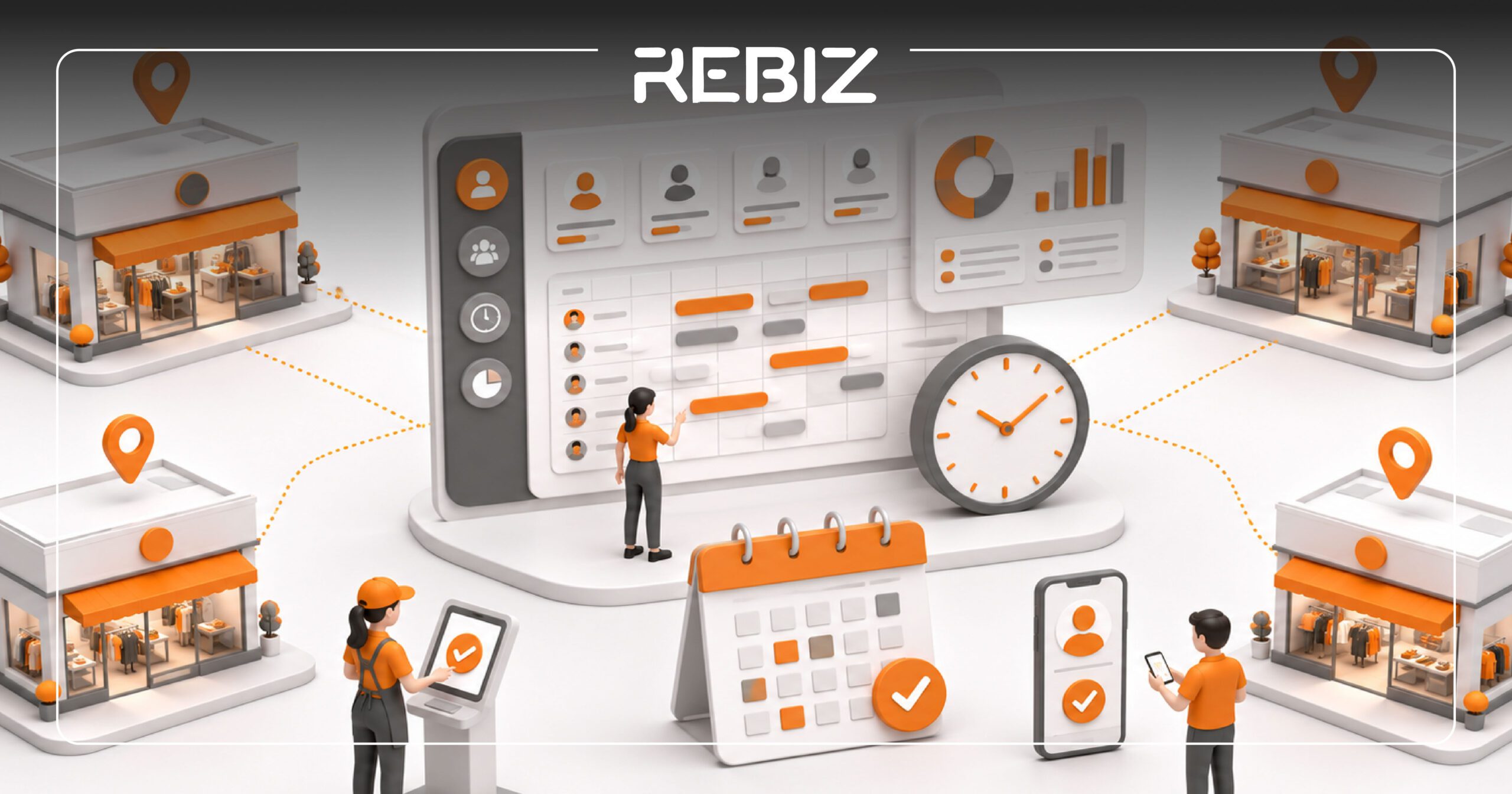
Retail labor is one of the largest operating expenses for multi-unit retailers, yet staffing decisions are often made using fixed schedules, historical trends, or manual adjustments. The result is overstaffed stores during slow periods, understaffed teams during peak hours, and inconsistent customer experiences across locations.
Modern time and attendance staffing and scheduling software helps retailers move beyond reactive workforce planning by using operational data to align staffing with business demand. This guide explores what modern workforce scheduling software should deliver and the capabilities that matter most for growing retail operations.
Why Workforce Scheduling Matters in Multi-Unit Retail?
Retail operations become increasingly complex as businesses expand to multiple locations. Time and attendance staffing and scheduling provide the structure needed to manage labor consistently across every store.
When staffing decisions are made without reliable operational data, retailers often experience common challenges:
- Overstaffing during slower periods, increasing payroll costs
- Understaffing during peak shopping hours
- Inconsistent employee coverage across locations
- Difficulty maintaining labor budgets
- Limited visibility into attendance trends
These issues impact more than daily operations. They influence sales performance, employee workload, customer satisfaction, and overall profitability.
Modern workforce scheduling helps retailers create more balanced staffing plans while maintaining operational consistency across every location.
What to Look for in Time and Attendance Staffing and Scheduling Software

Not all time and attendance staffing and scheduling solutions provide the same level of operational visibility. While tracking employee hours remains essential, today’s retail organizations require software that supports smarter staffing decisions.
Key capabilities include:
Accurate Time and Attendance Tracking
Reliable attendance records provide managers with clear visibility into employee work hours, helping reduce payroll discrepancies and improve workforce accountability.
Intelligent Staff Scheduling
Scheduling tools should allow managers to build shifts based on store demand, employee availability, and labor requirements rather than fixed templates.
Multi-Location Workforce Visibility
Operations leaders need a centralized view of staffing across every location. Standardized reporting helps identify scheduling gaps, attendance trends, and labor allocation opportunities without relying on individual store reports.
Workforce Reporting
Performance dashboards and labor reports help management teams monitor staffing efficiency, identify recurring attendance issues, and make informed workforce decisions over time.
Build Schedules Around Business Demand, Not Assumptions
Creating a schedule should involve more than assigning employees to open shifts. Effective workforce planning begins with understanding customer demand and store performance. For multi-unit retailers, it also means knowing how labor is allocated across every location.
When scheduling decisions are supported by operational data instead of assumptions, retailers can align staffing with actual business demand.
| Traditional Scheduling | Data-Driven Scheduling |
| Fixed weekly schedules | Staffing adjusts to expected customer traffic |
| Limited visibility into attendance | Verified employee presence and attendance insights |
| Labor decisions based on manager experience | Decisions supported by workforce and operational data |
| Overstaffing during slower periods | Labor aligned with store demand |
| Separate operational reports | Centralized visibility across multiple locations |
ReBiz supports this approach by combining validated employee presence with customer traffic insights and operational data. ReBiz works alongside existing retail systems to provide operations teams with better visibility into workforce activity. This helps managers make more informed staffing decisions across every location.
Benefits for Retail Operations Leaders
Effective workforce scheduling helps retail leaders improve labor efficiency, maintain operational consistency, and make more informed decisions across every location.
Key benefits include:
- Better visibility into workforce activity across stores, helping leadership teams make more informed staffing decisions.
- More time for managers to focus on employees and customer experience instead of resolving scheduling conflicts.
- Improved payroll accuracy through consistent time and attendance tracking.
- Simplified workforce planning during seasonal peaks and changing customer demand.
- Standardized scheduling practices across multiple locations while allowing flexibility for individual store needs.
- Better alignment between labor investment and customer demand through data-driven workforce planning.
Choosing a Workforce Management Solution That Scales
As retail operations expand, workforce management becomes increasingly complex. The right time and attendance staffing and scheduling solution should integrate with existing systems, support multiple locations, and provide the visibility needed to manage labor effectively.
Modern workforce management goes beyond tracking employee hours. It helps retailers align staffing with customer demand, improve labor utilization, and maintain operational consistency across every store.
ReBiz supports this approach by combining verified employee presence with customer traffic and operational insights. Retailers that want to explore this further can book a demo or request a free assessment to see how these insights fit into their existing operations.
As labor costs continue to rise, workforce planning is becoming a key driver of operational performance. Retailers that use data to guide staffing decisions are better positioned to improve efficiency, control costs, and deliver a more consistent customer experience.
Want to explore how workforce visibility improves scheduling decisions? Read our guide, The Future of Retail With Data-Driven Employee Monitoring Software.

FAQs
1. How do you choose effective time and attendance staffing and scheduling software for retail chains?
Choose a solution that supports multiple locations, integrates with existing systems, and provides visibility into workforce activity, attendance, and labor planning.
2. What are the key features of staffing and scheduling software for diverse retail environments?
Look for features such as time and attendance tracking, intelligent shift scheduling, multi-location workforce visibility, reporting, and seamless integration with retail systems.
3. What is the best time and attendance software for multi-unit retail businesses?
The best solution should scale across multiple stores, integrate with your existing technology, and provide actionable workforce insights that support better staffing decisions.
4. Why is time and attendance staffing and scheduling important for multi-unit retailers?
It helps retailers align staffing with business demand, improve labor utilization, and maintain consistent operations across multiple locations.
5. Can staffing and scheduling software help reduce labor costs?
Yes. It helps retailers allocate labor more efficiently, reduce overstaffing, and schedule employees based on operational demand.
6. Can staffing and scheduling software integrate with existing retail systems?
Many modern solutions integrate with POS systems, workforce platforms, and other retail technologies, allowing retailers to improve workforce planning without replacing their existing infrastructure.

