
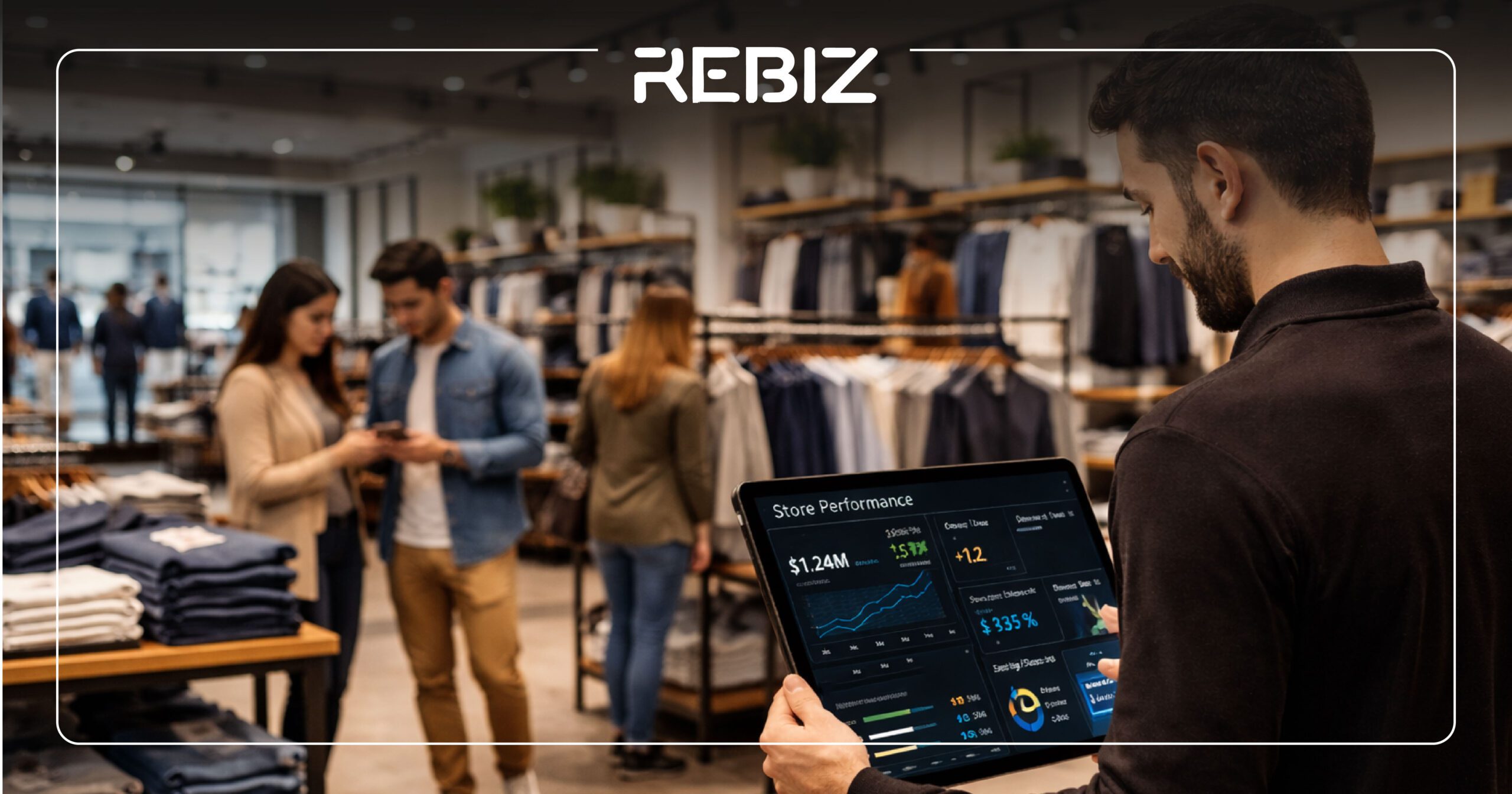
Customers enter stores every day, yet leadership often lacks a clear view of what happens between footfall and transactions. POS systems confirm sales, but they do not explain missed opportunities, uneven conversion, or why similar stores produce different results.
This gap quietly erodes the margin.
Verified footfall analytics, built on customer-only traffic counts, fills that gap. By connecting customer presence to sales performance and store execution, it provides the context operators need to understand where opportunity is lost and where action is required.
For multi-location wireless retailers, footfall analytics has become a foundational layer for performance control and scalable growth.
Key Overview
- Footfall analytics connects in-store traffic with sales outcomes, revealing how effectively wireless stores convert customer presence into measurable revenue.
- It exposes conversion gaps that POS reports cannot identify, helping leaders separate demand issues from execution failures.
- Traffic-adjusted performance insights allow fair comparison across locations, highlighting underperforming stores before results materially decline.
- Footfall analytics improves staffing alignment by matching coverage and engagement to verified customer traffic patterns.
- By correlating traffic, sales, and operational execution data, footfall analytics strengthens accountability and loss prevention visibility.
Why Wireless Retail Struggles With Visibility
Wireless retail businesses generate large volumes of data every day, including transactions, activations, staffing schedules, and store activity. Yet many operators still struggle to answer fundamental performance questions with confidence.
Why do certain stores consistently outperform others?
Where is performance breaking down before it hits the P&L?
Which locations require intervention before performance declines further?
The issue is not data availability. It is visibility.
Data remains fragmented across POS systems, spreadsheets, and delayed reports that explain what already happened but offer little guidance on what to do next. Without a unified view, leadership operates reactively.
Retail analytics software closes this gap. It creates a clear operational view across sales, staffing, and execution, allowing leaders to act with speed and precision.
What Is Retail Analytics Software?
Retail analytics software aggregates operational data from across the retail environment and translates it into performance insight.
In wireless retail, this typically includes:
- Sales and activation performance
- Store-level execution consistency
- Staff presence and productivity indicators
- Footfall analytics to contextualize customer traffic
Unlike POS reporting, which focuses solely on transactions, retail analytics focuses on patterns and performance drivers. It highlights where results diverge from expectations, where risk is emerging, and where opportunity exists.
The objective is not reporting volume. The objective is decision clarity.
The Real Problems Wireless Stores Face Without Analytics
Without a dedicated wireless retail analytics layer, most operators face persistent blind spots.
Conversion leakage and execution blind spots often surface only after performance declines.
Store performance inconsistency is masked by aggregated reporting. High-performing locations offset weaker stores, delaying corrective action.
Staff accountability erodes as the number of locations increases. Leaders rely on anecdotal input instead of validated operational data.
Decision latency grows. By the time reports are reviewed, the conditions that created the issue have already changed.
Each of these gaps carries a direct financial impact, not due to lack of effort, but due to lack of visibility.
How Retail Analytics Addresses These Gaps
Retail analytics software changes how performance issues are identified and addressed.
Real-time visibility surfaces discrepancies and deviations as they occur. Store-level benchmarking reveals which locations require attention and which practices should be replicated. Trend analysis distinguishes isolated incidents from systemic issues.
Loss prevention becomes evidence-based rather than reactive. Instead of responding to surprises, teams focus on verified patterns supported by data.
Most importantly, retail analytics compresses the time between insight and action. That compression is where operational value is created. Industry research shows that retailers using advanced analytics gain clearer visibility into customer behavior and execution gaps, enabling faster, more effective operational decisions.
Core Use Cases in Wireless Retail Analytics
Improving Sales Conversion
By combining sales data with footfall analytics, leaders can identify where customer traffic does not translate into transactions, pointing directly to execution gaps.
Reducing Operational Risk
By connecting traffic, staffing presence, and sales activity, discrepancies surface earlier, limiting exposure and protecting margin.
Identifying Underperforming Stores
Performance issues are identified through trends rather than missed targets, enabling targeted intervention instead of broad corrective action.
Optimizing Staff Productivity
Retail performance analytics clarifies whether staffing levels and presence align with actual demand patterns, improving scheduling discipline and accountability.
Strengthening Compliance and Audits
Objective operational data simplifies audits and reduces dependence on manual checks or subjective assessments.
Retail Analytics at Multi-Location Scale
As wireless retail businesses grow, spreadsheets and manual reporting fail to scale.
Multi-location operators require centralized dashboards with the ability to drill down to individual stores. Regional leaders need comparative insight, while store managers need clarity on local performance drivers.
Retail analytics software supports both needs simultaneously, reducing reporting friction and enabling faster, more precise corrective action.

How ReBiz Approaches Retail Analytics
ReBiz was built with a clear operating principle: analytics should support accountability and execution, not just visibility.
Designed specifically for wireless retail environments, ReBiz integrates with existing POS, camera, and scheduling systems to deliver verified customer-only traffic counts, rep-level sales conversions, and presence validation that directly impact sales performance and operational consistency.
The focus remains on clarity and action, showing where performance deviates and where intervention is required.
Measuring ROI From Retail Analytics Software
The return on retail analytics is measured through operational outcomes, not dashboards.
Wireless retailers typically see improvement through:
- Higher rep-level sales conversion consistency
- Reduced payroll leakage through presence validation
- Fewer unattended customer events
- Stronger execution discipline across stores
- Faster response to emerging performance gaps
Over time, these gains compound as organizations move from reactive management to data-informed execution.
When Retail Analytics Becomes Necessary
Most wireless retailers reach a point where manual oversight no longer scales.
Common indicators include:
- Expansion beyond a manageable number of locations
- Widening conversion gaps across stores
- Rising payroll discrepancies or presence validation issues
- Inconsistent execution between high- and low-performing locations
- Leadership time consumed by compiling reports instead of driving decisions
At this stage, retail analytics software becomes a core operating capability rather than an optional tool.
Conclusion
Retail analytics software is not a reporting upgrade. It is an execution tool.
For wireless retailers, it provides the visibility required to protect margin, improve consistency, and scale with control. Organizations that perform well over time are not guessing. They are measuring what matters, normalizing performance with footfall analytics, and acting early.
For wireless retail leaders managing multiple locations without clear, timely visibility, evaluating purpose-built retail analytics software can support stronger control and sustainable growth.

FAQs
Q1. What is footfall analytics in wireless retail?
Footfall analytics measures in-store customer traffic and connects it to sales, staffing, and operational outcomes, helping wireless retailers understand conversion performance and execution effectiveness.
Q2. How does footfall analytics improve wireless store sales?
Footfall analytics improves wireless store sales by revealing where customer traffic fails to convert, allowing leaders to address execution gaps rather than misdiagnosing demand or market conditions.
Q3. Why is footfall analytics more useful than POS data alone?
Footfall analytics provides traffic context missing from POS data, enabling wireless retailers to understand missed opportunities, normalize store performance, and identify execution issues affecting sales results.
Q4. Can footfall analytics help reduce payroll leakage or execution risk in wireless stores?
Footfall analytics, when paired with presence validation, helps identify coverage gaps, unattended customers, and inconsistencies in execution that can erode performance and margin.
Q5. When should wireless retailers invest in footfall analytics?
Wireless retailers should invest in footfall analytics when operating multiple locations, seeing inconsistent conversion rates, experiencing conversion inconsistency or staffing misalignment, or lacking clear visibility into store execution.

